ACOUSTIC MATERIALS
In addition to special, resonant designs, acoustic room treatment relies heavily on so-called porous absorbers. These are open-pored or open-celled structures which let air pass through, but apply some resistance. This friction converts sonic energy into heat energy and slows down the movement of the air. This is what we call absorption. Materials used include PU foams, melamine resin foams and mineral wool. They all have the same working principle, but quite different sonic characteristics.
| Material | Primary Application | Acoustic Effect | Installation & Handling | Special Features / Disadvantages |
|---|---|---|---|---|
| Polyurethan (PU) | Efficient broadband absorbers | Sound-absorbing (open-pored) | Easy to cut, glue, and screw | Inexpensive, lightweight, and elastic. Must not be painted. |
| Basotect | High-quality absorbers (incl. industrial use), corner placement | Sound-absorbing (open-pored), good low-frequency absorption (with membrane) | Gluing, hanging, inserting into grid ceilings | Breaks/crumbles easily, cannot be screwed. Flame retardant. Must not be painted. |
| Mineral wool | Wall insulation (rock wool), absorber boxes (glass wool) | Sound-absorbing, heat-insulating | Installation in walls or closed boxes with fabric covering | Irritates skin and respiratory tract when exposed (must be covered). |
| EPS (Styropor) | Diffusers | Sound-scattering and reflecting (due to its shape) | Gluing | Not open-pored (not an absorber). Paintable, but sensitive to solvents. |
| Wood | Diffusers, frames for acoustic modules | Reflecting | Screwing (rarely glued) | Heavy, but elegant appearance. Can be painted, varnished, and stained. |
Polyurethane
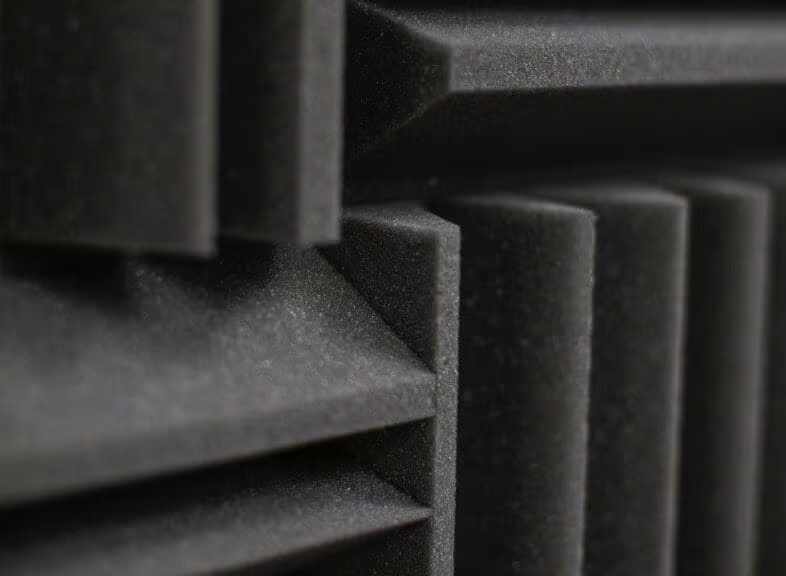
Polyurethane (PU) is a frequently used synthetic material that can be foamed. Its open-pored characteristics are vital for the use in absorbers. Ether-based polyurethane is very durable. Despite its high stability, PU foam is elastic, doesn’t break and is very light.
This combination, together with the low cost, makes PU foam an efficient material for acoustic absorbers. PU foams are easy to cut, glue and mount using fasteners. While polyurethane foams are available in a variety of colors, you should not paint them yourself. This would destroy the open-pored structure.
Basotect
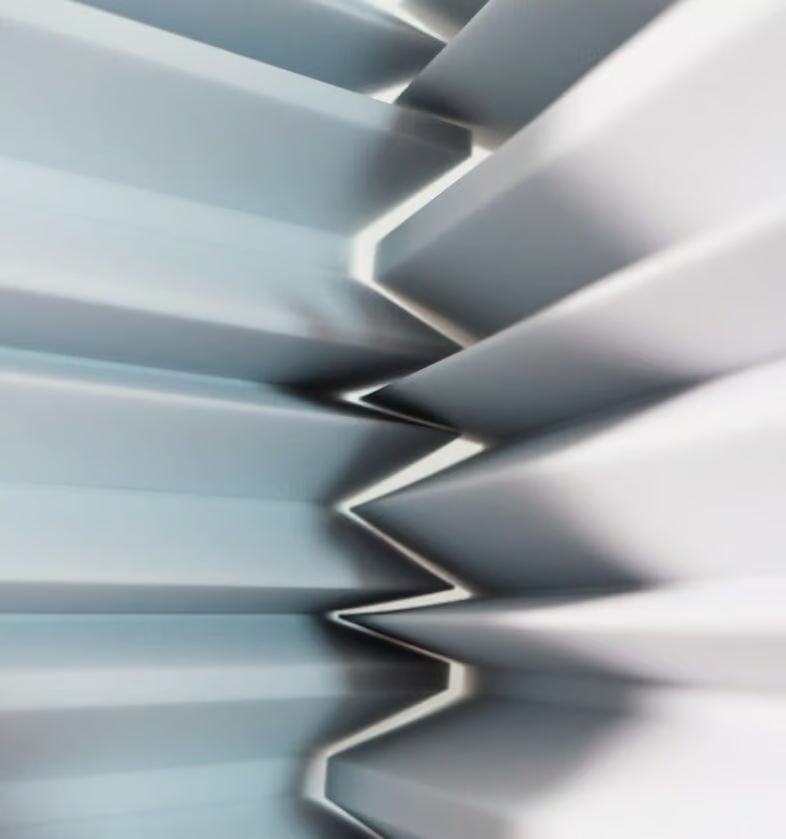
Basotect is the brand name of an open-pored foam made by BASF SE, which consists of melamine resin and is frequently used in absorbers. Basotect is lighter than most PU foams, offers better temperature insulation and is less flammable. For these reasons, it is often used in industrial applications.
It is also less flexible than PU foam, which is both an advantage and a disadvantage. Basotect panels can be hung like a picture, stood upright in corners or used in paneled ceilings. However, they break much more easily and can crumble a bit. In contrast to PU foam, it is not possible to screw them to the wall.
Many absorbers made from Basotect panels have an adhesive backing and a membrane covering on the front side, which increases low frequency absorption and makes them more stress resistant. Basotect is also available in white, which increases the visual design options. However, it should not be painted, as that would destroy the open-pored structure.
Mineral Wool
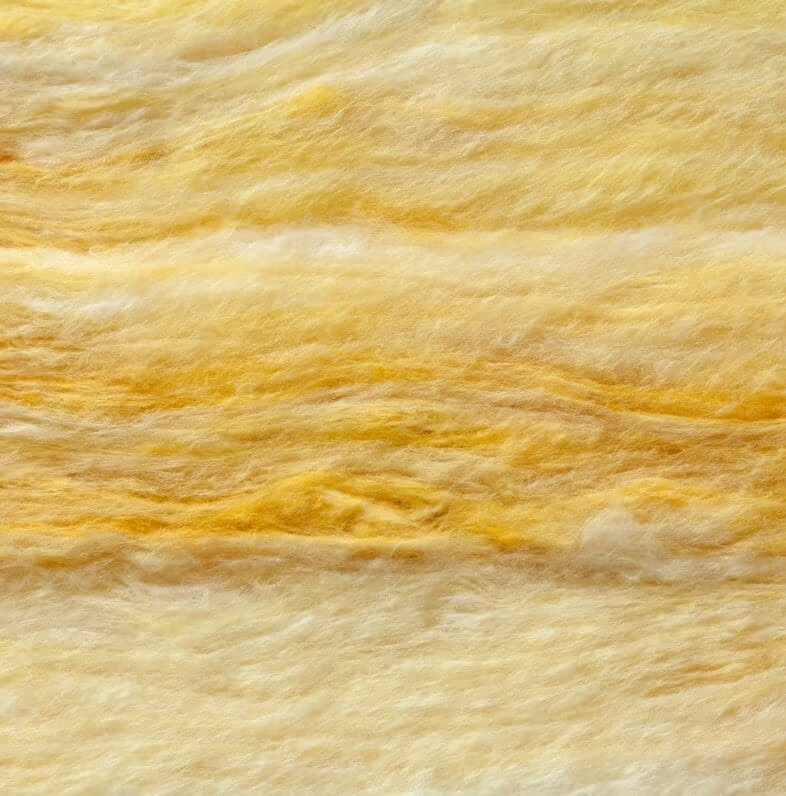
Mineral wool is a classic material for soundproofing and insulation and is widely used in construction. Synthetic mineral insulation materials can roughly be categorized in glass wool and rock wool, which use different proportions of melted rock, sand and glass.
It’s impossible to make a general assertion as to which material has the best sonic characteristics without considering the application. In acoustic applications, rock wool is often used as wall insulation, while glass wool is more often used in “open” absorbers. Both should not be used without a protective covering, as particles and dust can cause irritations of the skin and respiratory organs. This is why both are most often used in enclosed boxes and covered with cotton fabric. Since 1998, Germany has limited the use of mineral wool to varieties not suspected to be cancerous, but earlier materials may still be present in older buildings.
Some acoustic treatment materials don’t provide absorption directly through the material, but due to the construction. That’s why it is not a problem that these materials have smooth surfaces. Here are some examples of these materials:
EPS
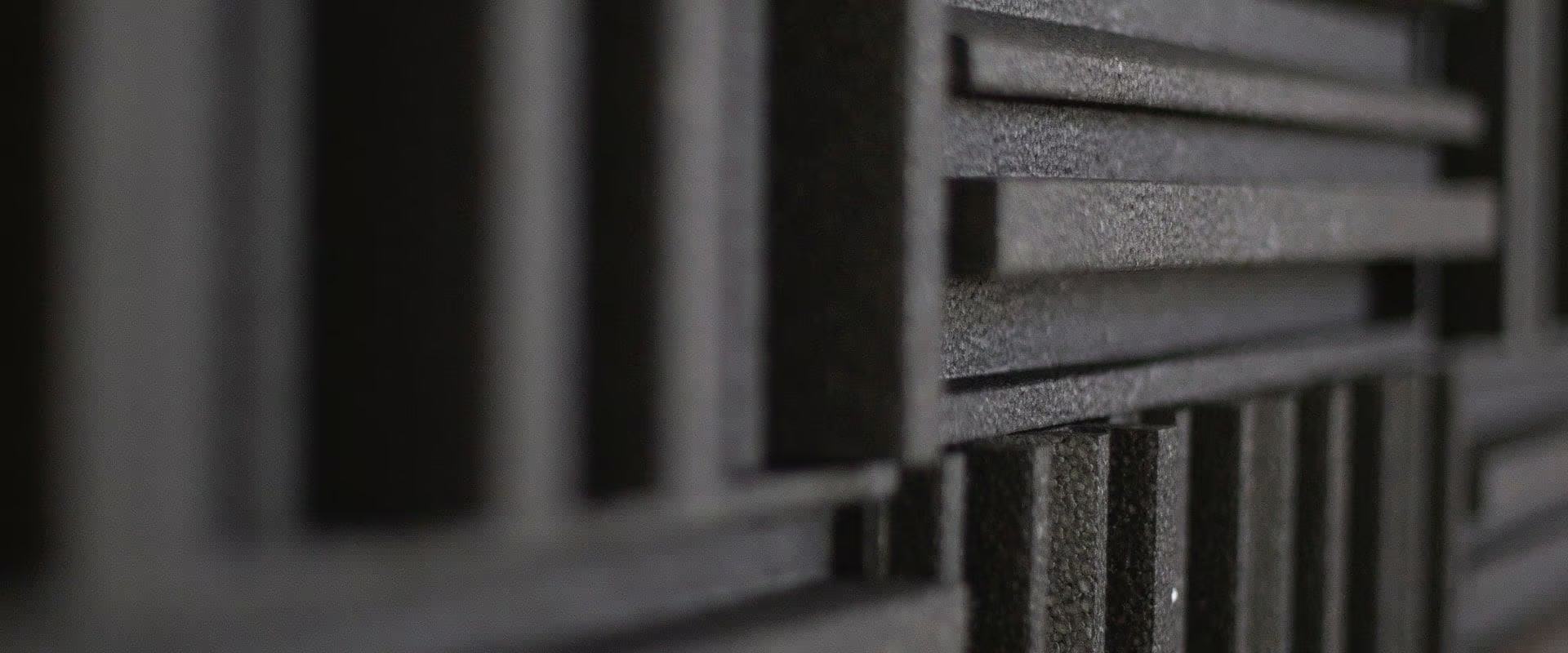
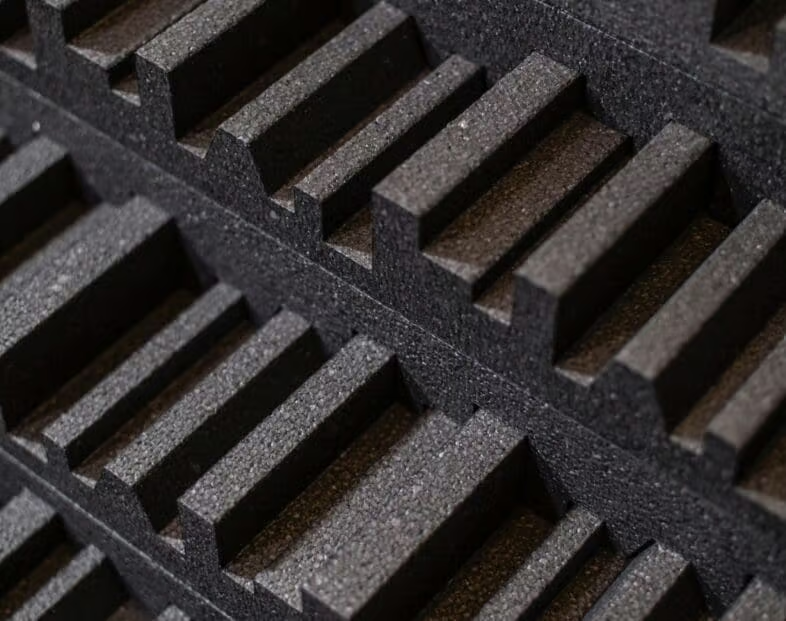
Expanded Polystyrene (EPS) is a synthetic foam best known by the brand name “Styrofoam”. In contrast to PU foam and Basotect, it is not open-pored and not suitable for use as an absorber. It is, however, used in diffusors and similar devices, which disperse the sonic energy due to their shape, while still reflecting it.
Some diffusors also have slightly absorbent characteristics. These are due to their shape rather than the material, and can usually be neglected. EPS can be painted, but care should be taken to use paint and solvents that do not harm the material.
Wood
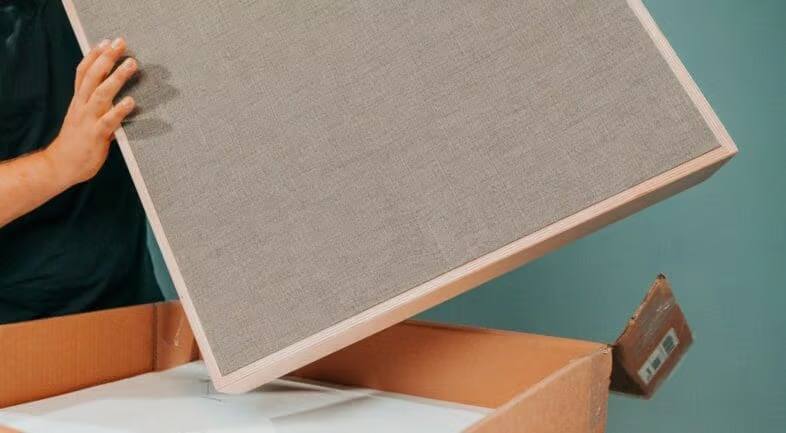
Wood is not open-pored and doesn’t absorb sound, but it is often used for framing acoustic modules. Likewise, many diffusors are made of wood, which provides an attractive and aesthetic look. Acoustic modules that use wood tend to be heavy, which is why it’s usually not possible to glue them to the wall. Wooden modules are generally bolted to the wall. Wood can be painted, varnished and stained.


More like this




You need to load content from reCAPTCHA to submit the form. Please note that doing so will share data with third-party providers.
More InformationYou are currently viewing a placeholder content from Turnstile. To access the actual content, click the button below. Please note that doing so will share data with third-party providers.
More InformationYou are currently viewing a placeholder content from Instagram. To access the actual content, click the button below. Please note that doing so will share data with third-party providers.
More InformationYou are currently viewing a placeholder content from Instagram. To access the actual content, click the button below. Please note that doing so will share data with third-party providers.
More Information